

Hardly anything puts more fear and dread in the hearts of other ethnic groups than hearing that the Black Community is going to boycott them.
Dr. Claud Anderson put in his book Powernomics that “[the] single act of 36 million Blacks withholding patronage would probably garner more respect for the Black race than all the marches, riots, and civil rights laws put together.”
Now, while it’s sad that it took us this long to follow Dr. Claud’s advice, it’s better late than never.
What’s the BLACKOUT (24/7 365 Boycott)?
Foundational Black Americans have been financially exploited for years by hostile anti-Black groups (including some “Black” non-FBA groups).
Recently, the Anti-Black sector of the Asian community has been showing out. Not only by violently attacking some of the Black customers/clients who are still foolish enough to patronize them, but by arrogantly daring FBAs to boycott them, boasting that FBAs are incapable of living without the mostly non-essential products and services that they provide.
Why Getting This Boycott/Blackout Right Matters
Foundational Black Americans have been directly called out for our lack of economic discipline. If we fail to follow through with our commitment to indefinitely boycott the anti-Black businesses among us, our word will be treated as chaff in the wind.
This Boycott/Blackout allows us to redirect our Black dollars toward our own community- as Dr. Claud Anderson also pointed out in his book “Powernomics.”
Redirecting spending toward our FBA businesses, especially by using the B1 Rolodex, fuels our own community’s economy.
FBA business growth can *create jobs***,** support families, finance education, and strengthen political organizing. A stronger business base gives a community more options and more leverage.
The Blackout/Boycott Naysayers
Malcolm X pointed out in a famous news clip that white supremacists have always used proxy individuals (sellouts) to regurgitate their talking points almost immediately after the truth is told by the Real Grassroots.
Nothing has changed. Immediately after FBAs called for a Blackout/boycott of anti-Black Businesses, no-name influencers, possibly tied to dark money, started popping out of the woodwork with anti-Boycott “we are the world” rhetoric.
Special attention needs to be given to anyone who is, especially on a consistent basis, speaking against the interests of Foundational Black Americans.
The History of FBAs Pulling Off Successful Boycotts (10 Examples)
Economic boycotts have long been a powerful tool used by Foundational Black Americans to get fair treatment, public services that our tax dollars were paying for, jobs, business funding, political influence, etc.
1. Adam Clayton Powell Jr. and the “Don’t Buy Where You Can’t Work” Boycott of 1933–1937
Before entering Congress, Adam Clayton Powell Jr. was already organizing in Harlem through the Abyssinian Baptist Church. He recognized that the church could serve as more than a place of worship—it could be a center for economic and political organizing.
Powell mobilized Black consumers against businesses that accepted Black dollars while refusing to hire Black workers. His message was clear: “Don’t buy where you can’t work.”
The strategy created an economic choice for local businesses: hire Black workers or lose Black customers. These campaigns helped secure employment opportunities and demonstrated how concentrated consumer power could be used to demand fair treatment.
2. The Baton Rouge Bus Boycott of 1953
Three years before the Montgomery Bus Boycott, Black residents in Baton Rouge, Louisiana, organized a successful transportation boycott. The action began after disputes over segregated seating and the city’s bus policies.
The campaign pressured city officials and bus operators into a compromise that provided premium seating conditions for Black riders, even though segregation itself remained in place. Baton Rouge showed that disciplined organizing and economic pressure could produce results before the most famous civil rights boycotts of the era.
3. Economic Boycott Of Emmett Till’s Murderer’s Family Businesses (1955)
Following the murder of Emmett Till and the acquittal of those accused, Black residents in Mississippi organized boycotts of businesses associated with the murderous families involved. This boycott demonstrated that even in an environment of severe racial oppression, FBA consumers could use our purchasing power to impose economic consequences.
This boycott definitely reminds us of the more recent Cyrus Carmack-Belton Murder acquittal. Rick Chow, an anti-Black Asian business owner, and others’ businesses are being boycotted.
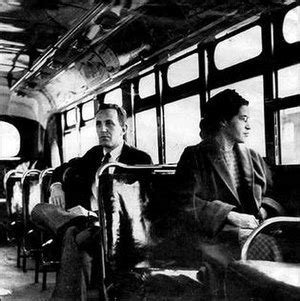
4. The Montgomery Bus Boycott of 1955-1956
The Montgomery Bus Boycott remains one of the best-known examples of organized economic resistance. For 381 days, Foundational Black American residents of Montgomery, Alabama, refused to ride the city’s buses in protest of segregated seating and unequal treatment.
The boycott cut deeply into transit revenue while participants built alternative transportation networks to sustain the effort. It became a landmark example of planning, community coordination, and most importantly, persistence.
5. The Edwards, Mississippi Boycott of 1966
In Edwards, Mississippi, FBA residents organized a citywide boycott after being denied fair access to jobs, services, and public improvements funded in part by their own tax dollars.
Organizers developed demands, coordinated alternatives to local stores, and used transportation systems to shop outside the town. The campaign affected local businesses and municipal tax revenues. Reports described severe losses and closures of stores, gas stations, laundromats, theaters, and other businesses that depended heavily on Black consumers.
The Edwards campaign also highlighted the need for alternatives, which is why the B1 Rolodex strives to provide alternatives to better sustain long-term boycotts.
6. The Greenwood Mississippi Grocery Store Boycott circa 1962-1969
Foundational Black American residents and civil-rights workers confronted the “Greenwood Food Blockade,” in which food aid was restricted amid retaliation against the civil rights movement. Greenwood also saw merchant boycotts over racist treatment and discriminatory hiring. The most thoroughly documented extended merchant boycott ran from fall 1967 to early 1969, winning jobs for Black residents and neighborhood improvements.
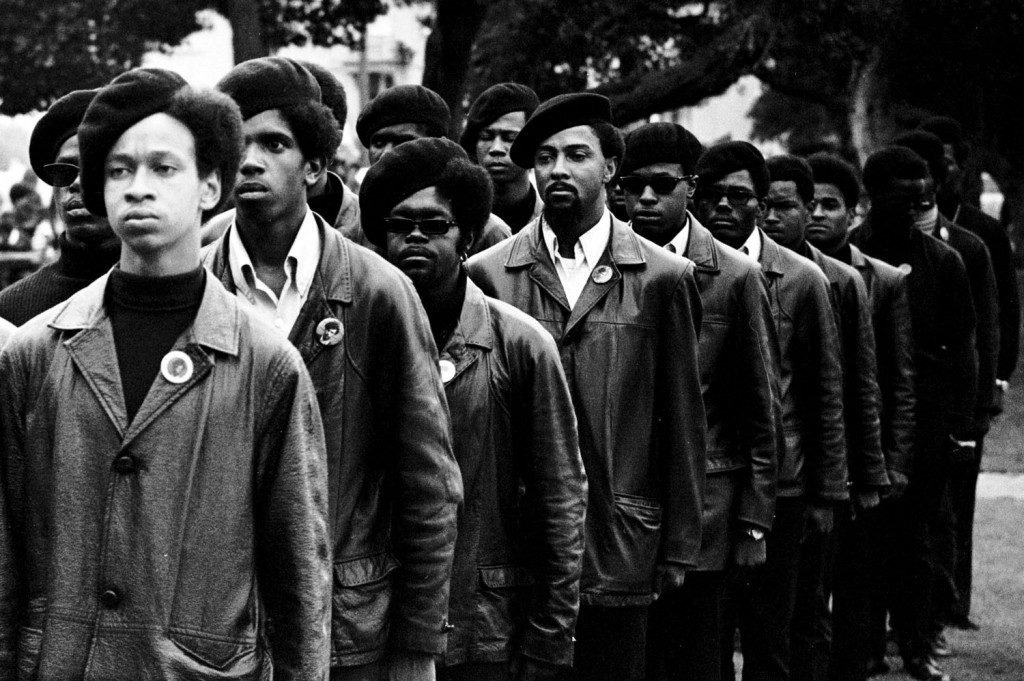
7. The Black Panther Party Boycotts, including the Oakland Safeway Store Boycott of 1969
The Black Panthers shut down various businesses, but one in particular that stood out and frightened onlookers was the boycott of the Oakland Safeway store. That Safeway rejected the Black Panthers’ request to contribute to the Panthers’ Free Breakfast for Children Program while expecting the one-sided support they were receiving from the FBA community and others.
The Black Panthers formed a strategic alliance with the United Farm Workers (UFW) and got it shut down.
8. The Boycott/Shutdown of the Happy Red Apple Nails in East Flatbush, Brooklyn (2018)
Local activists, especially our FBA Sister Breuck, worked to get this violent anti-Black business shut down. Lots of sabotage from Democrat-connected individuals and possibly intelligence agencies was used to attempt to thwart the efforts of the boycott. FBAs prevailed.
9. The Boycott/Shutdown of Crab Du Jour in 2022
Boycotted and shut down after the assault of a Black woman.
10. The Boycott/Shutdown of the Tether-Owned Mama Gifted Hands Braiding Shop in 2025
Boycotted and shut down (as of the last report) after the anti-Black assault and kidnapping of a Foundational Black American woman.
What can we learn from the Successful Foundational Black American Boycotts?
The examples outlined in this article prove that FBAs are capable of getting on-code enough to shut down different businesses and sometimes entire cities.
FBA boycotts work. Economic action through the intentional diversion of resources (the wealth transfer) can influence social and political things- including our safety and quality of life.
What does it take for a Boycott to be Successful?
You may be surprised to know that it doesn’t take 100% of Foundational Black Americans being on-code to have a successful boycott.
Contrary to popular belief, anything that Foundational Black Americans accomplished did not get accomplished because 100% of our people were unified and on-code. It was always a small critical mass of individuals putting in work. This was true during various slave rebellions, wars, riots, the civil rights movement, and the same can be said about now during the delineation and FBA empowerment movement.
What’s key to remember is that gross revenue generated by businesses is not their net revenue. Net revenue for businesses can sometimes be as small as 8%. Plus, many businesses can't afford to take a 20% drop in sales. This means that if we can get just 20% or so (who were once patronizing anti-Black establishments) to participate in the Blackout/boycott, we’ll have major success.
Final Thoughts
Do not let defeatist talk/thinking convince you that collective boycotting action is impossible. From the Harlem Boycotts in the 1930s to more recent boycotts of 2025-2026, FBAs have proven to be very good at organizing and economically resisting oppression.
The indefinite Blackout/boycott can and will work if we are disciplined and use the B1 Rolodex to support FBA and B1 businesses. Improving our own community’s economy.